

Professional Plain Spunlace Substrate for Wet Wipes & Dry Wipes - Excellent Linting Control
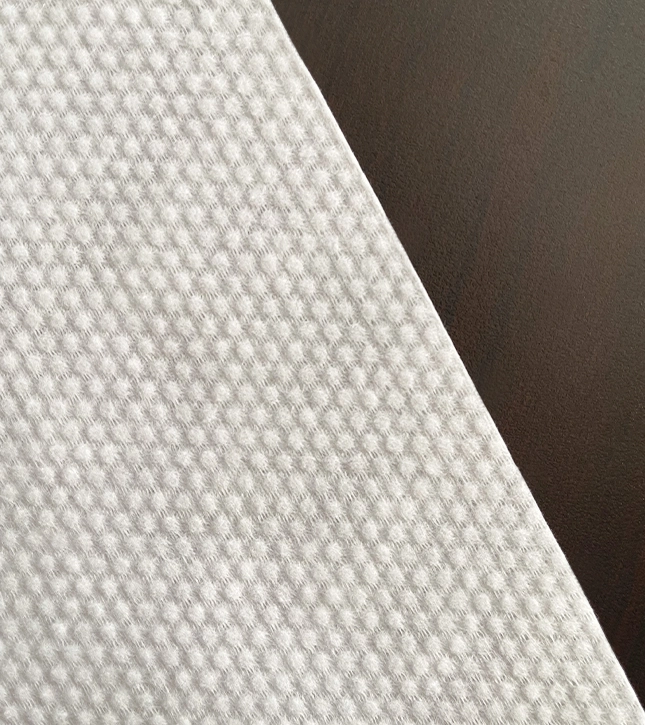
spunlace nonwoven full cross semi cross roll for wet wipe
View productMost shortlists fail not because candidates are scarce, but because nobody scored them the same way. Use this framework as a working buying guide for nonwoven fabric manufacturers and for comparing spunlace nonwoven fabric suppliers on the things that decide whether your first container matches your pilot roll: raw material continuity, per-batch testing depth, sampling speed, tension balance and capacity resilience. Each of the twelve criteria below carries a question to send and a red flag to watch, so the scorecard can be used on any supplier — including this one.
Score every shortlisted supplier from 0 to 2 on each line. A supplier that cannot answer a "how to verify" question with a document, a record or a live walkthrough scores zero — not "one, pending". Use the grid as a live working document during the shortlist stage and keep the scores with your sampling notes, so the technical check and the commercial decision are made against the same evidence.
| Criterion | Why it matters | How to verify | Red flag |
|---|---|---|---|
| 1. Raw material continuity | Gram weight, tensile and absorption all drift if the fiber input changes between batches. | Ask how viscose and polyester supply is secured, and whether fiber intake is recorded per lot. | No named fiber grades and no intake record. |
| 2. Batch parameter locking | Locked parameters stop a good pilot batch from becoming a variable production batch. | Request the parameter record for one finished batch and match it to the sample you approved. | Parameters "adjusted by operator experience". |
| 3. Fiber-to-roll traceability | Traceability is what lets you isolate a complaint to one lot instead of a whole shipment. | Ask for the record path from fiber intake through to the finished roll number. | Roll numbers exist but link to nothing upstream. |
| 4. In-house testing capability | In-house laboratories can retest the same batch quickly; external labs extend the feedback loop. | Ask which tests run on site and which are sent out, then request a walkthrough. | Every test result comes from a third party. |
| 5. Test frequency per batch | A single pass/fail reading hides in-batch variation across a wide roll. | Ask for the test count per batch for thickness and basis weight. | "One test per batch" or "when requested". |
| 6. Wet and dry tensile testing | Wet strength separates a usable wipe substrate from one that shreds on the line. | Request both longitudinal and transverse results, in dry and wet conditions, plus fracture rate. | Only dry tensile data is available. |
| 7. Weight and thickness stability | Thickness drift changes absorbency and converting tension on the same setting. | Ask for the stated per-batch test counts and compare against your own sample measurements. | Tolerance stated only as "industry standard". |
| 8. Online metal and stain monitoring | Contamination found after winding becomes a claim, a rewind and a delayed launch. | Ask whether metal, stain and weight monitoring run online during production. | Inspection happens only at final packing. |
| 9. Longitudinal / transverse tension balance | Balanced tension keeps the web flat and stops edge curl during unwinding. | Ask how tension balance is achieved and sample a full roll width, not a centre strip. | Samples cut from the roll centre only. |
| 10. Sampling turnaround | Slow sampling pushes your own development schedule, not the supplier's. | Ask for a committed sampling window in days and confirm the courier arrangement. | "Samples after order confirmation". |
| 11. Technician depth and line coverage | One experienced engineer on one shift is a single point of failure. | Ask how many production line technicians support the process and how shift coverage works. | No named technical contact for your project. |
| 12. Finishing and documentation | Hydrophilic, anti-static and flame-retardant finishes change how the substrate behaves downstream. | Confirm which finishing treatments are available and how each is described on the delivery documents. | Finishing described only verbally. |
Stable output starts before the line does. A supplier that cannot describe where its viscose and polyester come from — or how a finished batch is tied back to the fiber that entered the plant — cannot promise you the same roll next quarter.
Ask the supplier to describe the viscose and polyester supply position and whether the grades are held as an abundant and stable base rather than bought spot.
Each incoming fiber lot should be logged against a batch identifier before it is opened, creating the first link in the traceability chain.
Once your approved sample matches a parameter set, those settings are locked to the batch rather than re-tuned per shift.
Finished rolls carry an identifier that leads back to the locked batch and the fiber intake record.
You should be able to point at one finished roll and be shown the batch you approved — not a summary table.
Verification question to send: "Please show the batch parameter locking and fiber raw material traceability record for one recent production batch of this substrate."
The chain to ask about: fiber intake record → locked batch parameters → finished roll identifier.
An in-house laboratory is not automatically better than an external one — the difference is the number of tests behind each batch, and how quickly a failure can be retested on the same material.
| Decision point | In-house testing | Outsourced laboratory | What to ask |
|---|---|---|---|
| Feedback loop | Same-shift retest of a suspect batch | Days between sampling and result | "How many tests run on site per batch?" |
| Batch coverage | Every batch tested against fixed counts | Often sampled per shipment, not per batch | "Is every batch tested, or only selected batches?" |
| Tensile evidence | Dry and wet, longitudinal and transverse, plus fracture rate | Usually one specimen orientation | "Can I see both directions, dry and wet?" |
| Failure handling | Batch held before winding or packing | Material already in stock when results arrive | "At which stage is a failed batch stopped?" |
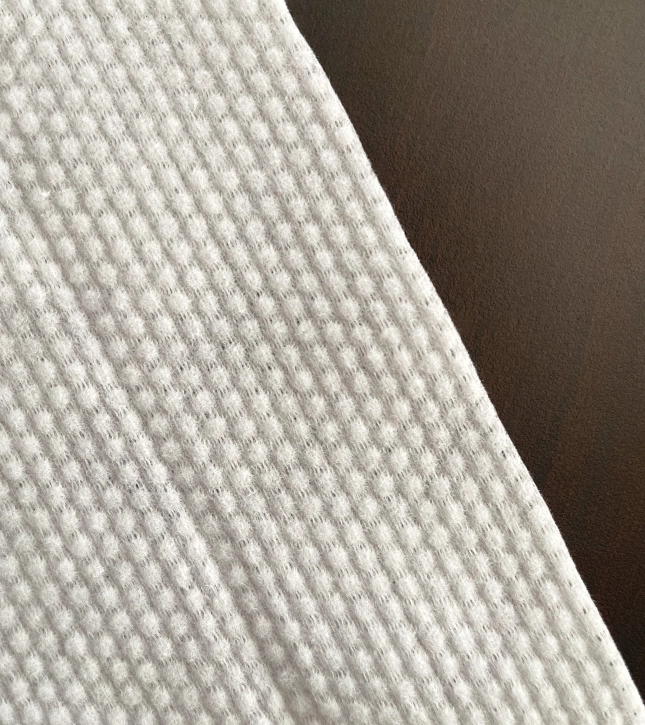
Batch testing sits between the line and the pallet — the counts are what make it meaningful.
Use these internal control standards as the reference point when you compare answers. A supplier that cannot match the counts should explain what it does differently, not simply say yes.
A sample tells you almost nothing unless it arrives with the same identifiers production will use. Treat the sample stage as a small pilot, not a courtesy.
Your sampling request should also ask for a named 1 v 1 solution consultant, so questions during evaluation go to one technically accountable person.
Label every sample roll: composition, gram weight, pattern, finishing and batch reference.
Quality criteria tell you what a supplier can produce. Capacity criteria tell you whether they can keep producing it for you in month nine — and what happens when a batch fails.
All of your volume runs on one line, so one maintenance window becomes your stockout.
High impact · ask for line coverageNo engineer or technician depth behind the process means problems get solved by trial and error.
High impact · ask for team depthMetal, stain and weight defects found after winding require rewind, credit or scrapping.
Medium–high impact · ask about online monitoringContinuous coverage is what keeps parameters stable between shifts on the same batch.
Medium impact · ask about 7x24h coverage
Online weight, metal and stain monitoring turn a defect into a line adjustment instead of a claim.
The framework above is easiest to test against a real specification. This is the full-cross substrate the criteria are framed around — use it as the reference material when you score your shortlist.
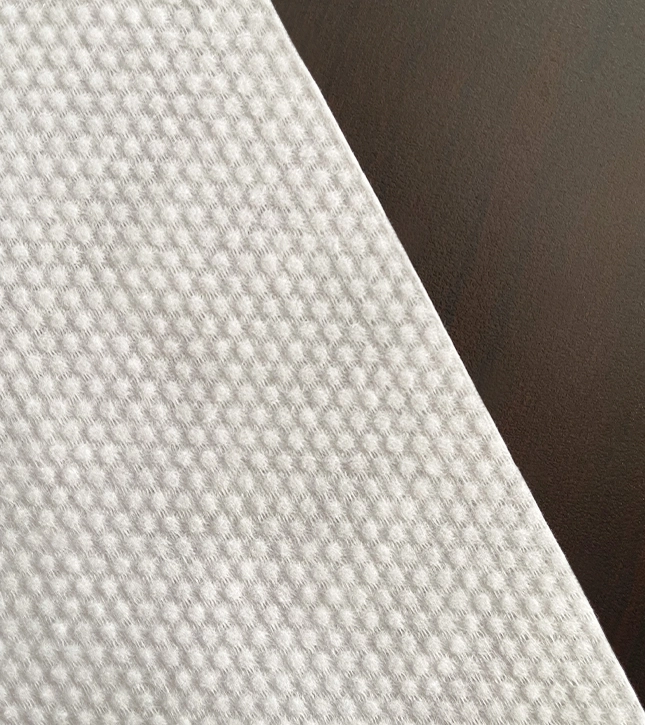
Full-cross embossing increases friction and balances longitudinal and transverse tension across the roll.
| Item No. | EL-1 |
| Composition | Viscose / Polyester / Bamboo |
| Technology | Full-Cross |
| Pattern | Large Cross Embossed |
| Gram weight | 50 – 150 gsm |
| Roll width | 4 – 160 cm |
| Finishing technology | Hydrophilic, anti-static, flame-retardant and similar treatments |
| Typical usage | Face towels, compressed towels, disposable bath towels |
| Stated performance traits | Dry / wet strength tested, stable weight and thickness, lint-free |
Confirm gram weight, pattern and finishing for your application before ordering — specification bands are wide, and your converting line decides where inside the band the material should sit.
Four common converting scenarios, each mapped to the data points that should be pinned down before the first commercial batch — and the evidence that closes the discussion.
| Your scenario | Specification points to lock | Buyer decision it drives | Verification that closes it |
|---|---|---|---|
| Face towels and hygienic wipes | Gram weight within the stated 50 – 150 gsm band, hydrophilic finishing, roll width from 4 – 160 cm to match your cutter | Absorbency versus cost per square metre | Water absorption rate tested according to the material ratio, on your approved batch |
| Compressed towels | Basis weight and thickness consistency, lint-free surface, controlled pH | Whether the compressed tablet holds shape and expands cleanly | Per-batch test counts for weight and thickness, plus the neutral pH statement |
| Disposable bath towels | Wet tensile performance, fracture rate, full roll width for wide-sheet layouts | Wet-handling durability at the thickness you are paying for | Dry and wet longitudinal and transverse tensile results, plus fracture rate data |
| Higher-friction converting lines | Full-cross embossing pattern, anti-static or other finishing selection, tension balance across the web | Line speed and stop frequency caused by web behaviour | 30-cycle friction test results and a full-width sample, not a centre strip |
Copy the list into your RFQ. The answers are directly comparable, which is the only way a twelve-point scorecard produces a decision instead of a spreadsheet.
Score answers, not brochures — a supplier that answers all ten can be shortlisted with confidence.
Send your composition, gram weight, pattern, roll width and finishing requirement. Sampling runs on a flexible 3 – 7 day window and a named 1 v 1 solution consultant stays with your project from the first swatch to the first production batch. Bulk orders, OEM and ODM substrate customisation and custom finishing programs are all handled through the same request path.
Keep adjacent product options together for a faster catalog comparison.
spunlace nonwoven full cross semi cross roll for wet wipe
View productDry/Wet Strength Testing Stab le Weight/ ThicknessLint-Free Composition:Viscose / Polyester / Bamboo Technology:Semi-Cross Pattern:Plain(Printable) Gram weight:40 - 120 gsm Roll Wi
View productDry/Wet Strength Testing Stab le Weight/ ThicknessLint-Free Composition:Viscose / Polyester / Bamboo Technology:Full-Cross / Semi-Cros Pattern:Cross Embossed (Small) Gram weight:40
View productthe stated composition is viscose, polyester or bamboo, produced with full-cross technology and a large cross embossed pattern. the listed gram weight range is 50 – 150 gsm with a roll width of 4 – 160 cm, and finishing options include hydrophilic, anti-static and flame-retardant treatments.
ask for test counts rather than a pass certificate. the stated internal control standards are more than 8 thickness tests per batch, 8 basis weight tests per batch, 30 repeated friction tests per batch, dry and wet longitudinal and transverse tensile tests with fracture rate, a water absorption test based on the material ratio, and a neutral ph value.
sampling runs on a flexible 3 – 7 day window, with a 1 v 1 solution consultant assigned to the request. send the composition, target gram weight, pattern, roll width and finishing requirement with the request so the sample matches what production would actually run.
the stated finishing options cover hydrophilic, anti-static and flame-retardant treatments, among others. confirm the treatment you need at sampling stage, because finishing changes wetting behaviour, static build-up and downstream converting performance.
score the process, not the catalogue. relevant points are a spunlace engineer with more than 20 years in the technology, a team of 20+ production line technicians, 7x24h production line coverage, online monitoring with metal monitoring and levelling equipment, and laboratory testing running alongside the line — plus batch parameter locking and fiber raw material traceability.
use the contact form on the contact page and submit your company name, contact name, email and requirement. bulk quantities, oem and odm substrate programs and custom finishing requests all go through the same request path, and you can ask for samples first so the quotation is written against a material you have already evaluated.


